
The Life of Miyamoto Musashi
Miyamoto Musashi, originally Miyamoto Masana, was a famous samurai, duellist, philosopher and artist who lived during the Early Edo period. Whilst we are martial artists first and foremost, and certainly not history experts, we hope the below will be illustrative of this remarkable life that is responsible for the creation of our traditional school of swordsmanship.
Musashi started his career as a warrior early in his life, being only age thirteen when he first killed another in single combat. Around 1600 he was involved in (on the losing side) one of the most famous battles of that period – the Battle of Sekigahara, which would go on to pave the way for the establishment of the Tokugawa shogunate.
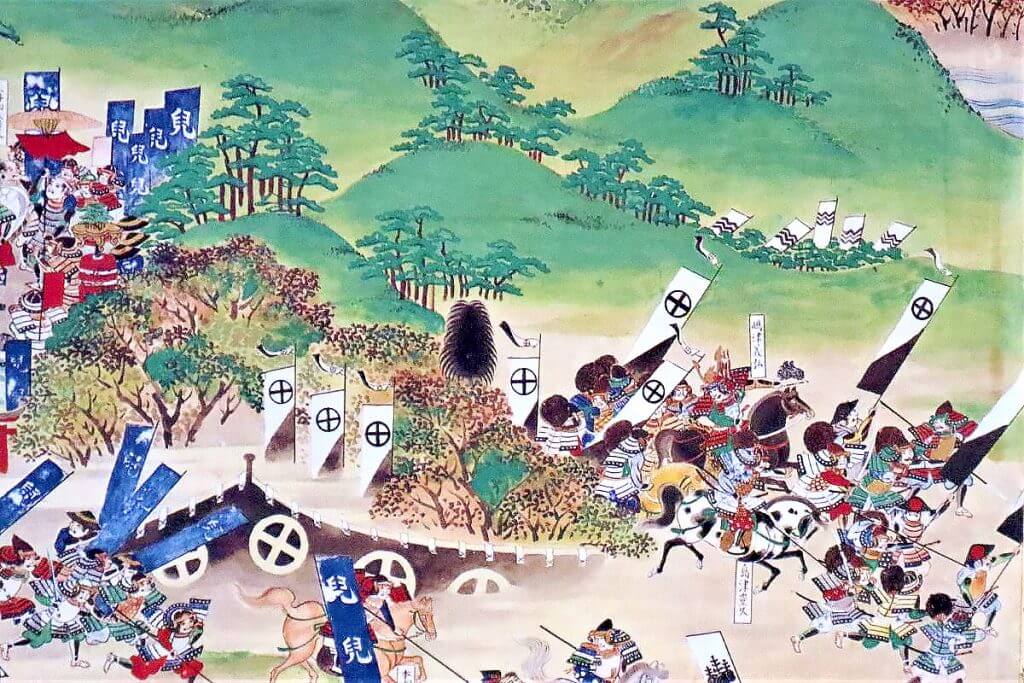
This loss meant Musashi became rōnin, a masterless samurai. Over time, he developed his skills, setting out on a personal quest to create the most perfected sword techniques. The result of this was the invention of Hyōhō Niten Ichi-ryū, the style of fencing with two swords we practice today.
Musashi claimed to have fought in more than sixty individual duels – all of which he won. Many of these are documented, and many were fought to the death.
Arguably Musashi’s most famous duel took place in 1612, against his arch rival Sasaki Kojirō. The banner at the top of our site shows this event – Sasaki Kojirō was known for his skill with a nodachi, essentially a longer katana than usual. He had developed extreme skill with this weapon after training for long periods with his master, likely Toda Seigen who favoured the use of a kodachi, a short sword. Kojirō had developed a technique known as the “Turning Swallow Cut” or Tsubame Gaeshi (燕返し, “Swallow Reversal / Return”), so named because it mimicked the motion of a swallow‘s tail during flight. This became respected and feared throughout feudal japan.
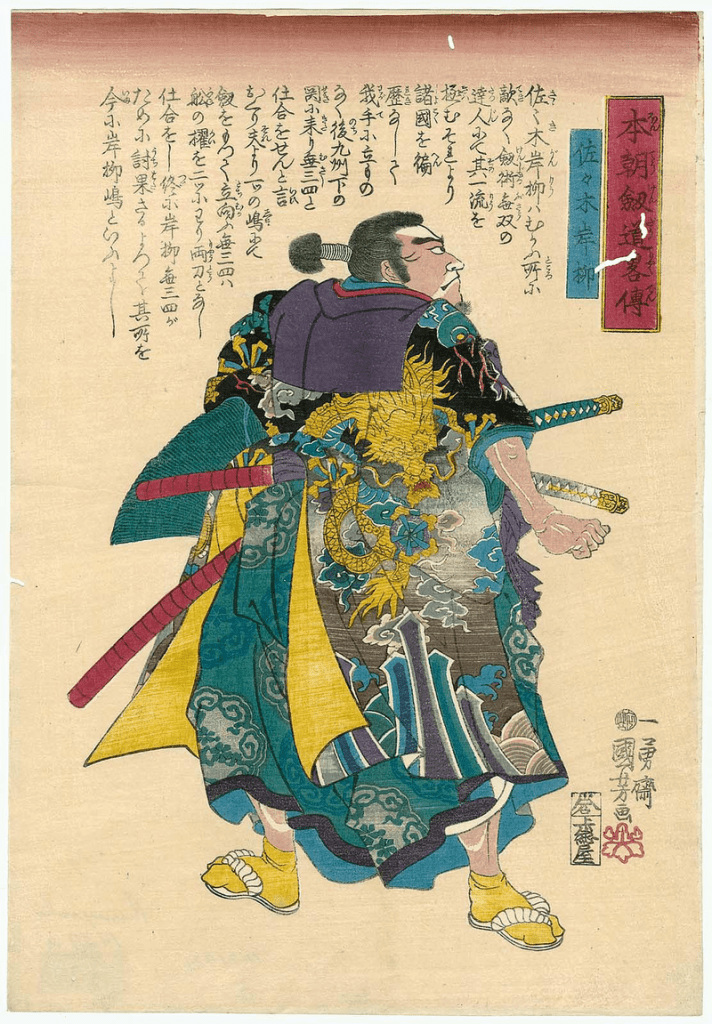
At around twenty nine years old, Musashi heard of Kojirō’s growing fame and asked Lord Hosokawa Tadaoki through an intermediary to arrange a duel. Tadaoki agreed to the challenge and set a time and place of13th April, 1612, with the duel to be held on the remote island of Ganryujima in Funashima. This island, located in the strait between Honshū and Kyūshū, was likely chosen to prevent interference in the duel. There were concerns that the many students Kojirō had accumulated may attempt to kill Musashi if he was indeed to win.
According to the legends, we get a rough account of how the duel likely transpired. The following account blends the versions that we have available to us – it is important to say we can’t be sure. It must be said that there are conflicting accounts of the duel, which complicates a simple retelling, and the following should be read with this in mind.
Musashi arrived over three hours late, armed with only an oversized wooden bokken (sword). This was not a mistake on Musashi’s part but rather a tactic he had used on previous occasions, such as during a series of duels with some swordsman from Yoshioka. The sight of this ‘crude’ weapon, which Musashi had supposedly fashioned on his boat ride to the duel location, must have further aggravated Kojirō. Upon arriving on the beach, Musashi responded to Kojirō’s barrage of insults by simply smiling. Kojirō, irritated by Musashi’s behaviour, is said to have dramatically thrown his saya (scabbard) into the sea as a sign of intent that he would fight to the death. Musashi apparently responded by simply saying his opponent clearly wasn’t confident in himself and his ability to win, if he thought he’d never get a chance to use such a fine scabbard again.
Enraged, Kojirō attacked Musashi without hesitation – the first blow coming so close as to even sever Musashis chonmage (hair knot). In the resultant fight it is said Kojirō came close to victory several times – but he would go on to make a fatal error.
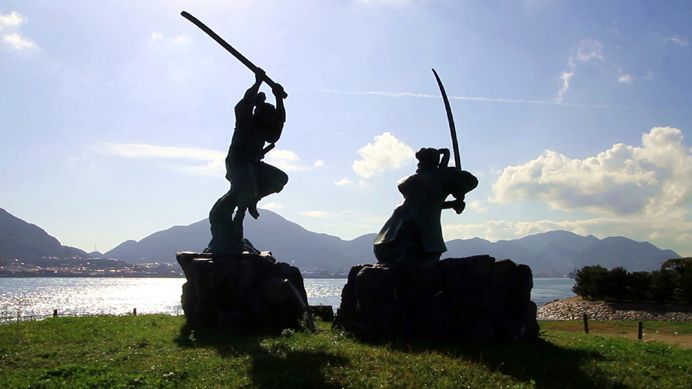
By clever positioning, and psychological warfare, Musashi had baited Kojirō into a lethal trap. As he went to employ his “Turning Swallow Cut”, he misjudged distance and timing. This meant that ultimately Kojirō was blinded by the sunset at a critical moment.
It seems unclear as to how the resultant blow claimed actually claimed Kojirōs life. One account has it connecting with the head, instantly ending the duel – another account details that the blow in fact struck Kojirō on the left side. This supposedly had the devastating effect of puncturing the lungs, leading to a painful, drawn out death but still ending the fight with some swiftness.
Musashi is then said to have hastily retreated to his boat, sailing away as fast as possible. Another benefit to arriving late to the duel, it is theorised, is that Musashi had intentionally planned the duel to finish at the time when the tide was outgoing – all to aid in his escape.
This was Musashi’s last fatal duel. He would later recount that Kojirō was the strongest opponent he had ever fought. After reaching what he considered his peak as a swordsman, Musashi mostly retired from duelling life. He would fight duels in later life, but only sporadically and never again under such high stakes. Instead, he turned his attention elsewhere, not least his two adoptive sons and was involved in the Osaka Winter and Summer battles, remnant disputes from the Toyotomi and Tokugawa civil war. Later, he would be involved in battles to suppress the Shimabara Rebellion of 1637, which would be his last major involvements in warfare.
Musashi eventually retired to Kumamoto Castle with daimyō Hosokawa Tadatoshi of whom he became a retainer. He dedicated himself to furthering his swordsmanship as well as the arts of painting and writing. In the second month of 1641, Musashi wrote a work called the Hyoho Sanju Go (“Thirty-five Instructions on Strategy”). This work would go on to form the basis of his next work.
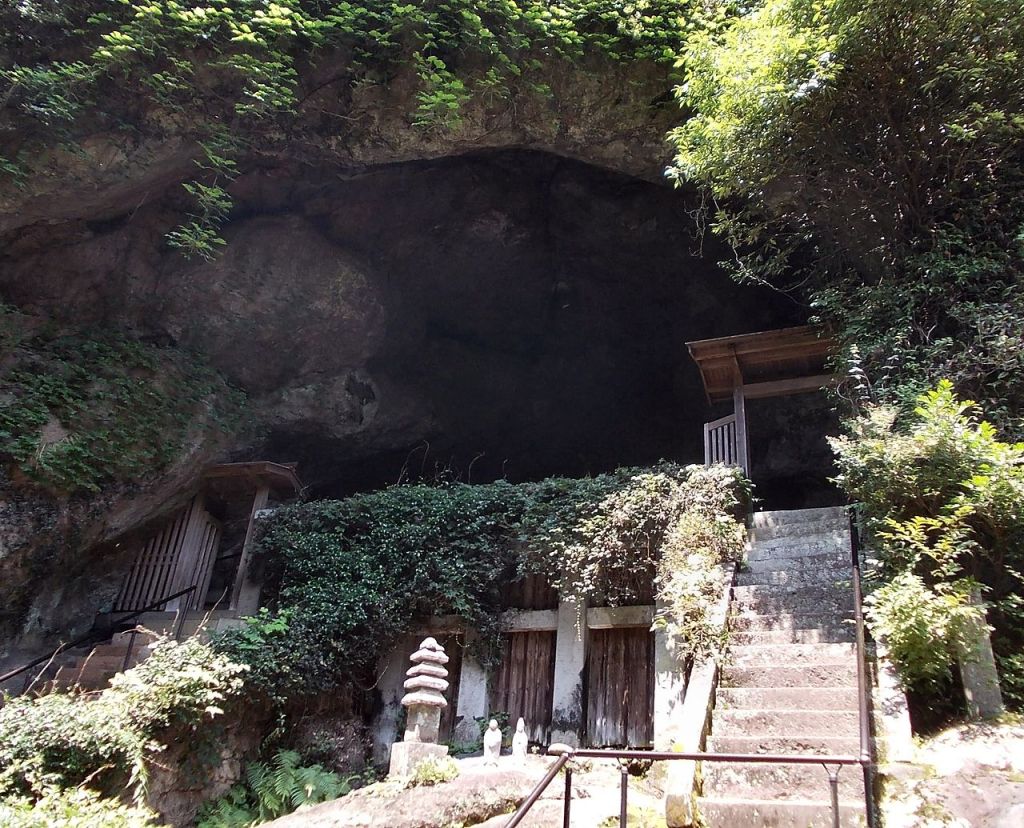
Suffering from bouts of neuralgia, Musashi moved out to live in a mountain cave known as Reigandō as a hermit to write Go Rin no Sho (The Book of Five Rings). He finished it in the second month of 1645. On the twelfth of the fifth month, sensing his impending death, Musashi bequeathed his worldly possessions, after giving his manuscript copy of The Book of Five Rings to the younger brother of Terao Magonojo, his closest disciple. He died in Reigandō cave around June 13, 1645 (Shōhō 2, 19th day of the 5th month). The Hyoho senshi denki described his passing:
‘At the moment of his death, he had himself raised up. He had his belt tightened and his wakizashi put in it. He seated himself with one knee vertically raised, holding the sword with his left hand and a cane in his right hand. He died in this posture, at the age of sixty-two. The principal vassals of Lord Hosokawa and the other officers gathered, and they painstakingly carried out the ceremony. Then they set up a tomb on Mount Iwato on the order of the lord.’
Before his death, Musashi had also written another work, known as Dokkōdō (“The Way of Walking Alone”, or “The Way of Self-Reliance”). These 21 precepts on self-discipline Musashi left to to guide future generations. It is these we seek to apply in our training, and our lives to this day as students of Musashi’s ryūha.
The Line of Succession
Our group belongs to a martial tradition which traces back some four hundred years across twelve generations of headmasters back to its founder. We are thankful to the past and present masters who continue the flow of this tradition that we enjoy and benefit from to this day.
At the present time. we are under the guidance of Kajiya Takanori Kougen, 12th generation Sōke – Hyōhō Niten Ichi-ryū, who tirelessly continues to disseminate this cultural and martial tradition.
Below photos are six generations of Sōke to present day.
7th Sōke Santo Shinjuro Kiyotake
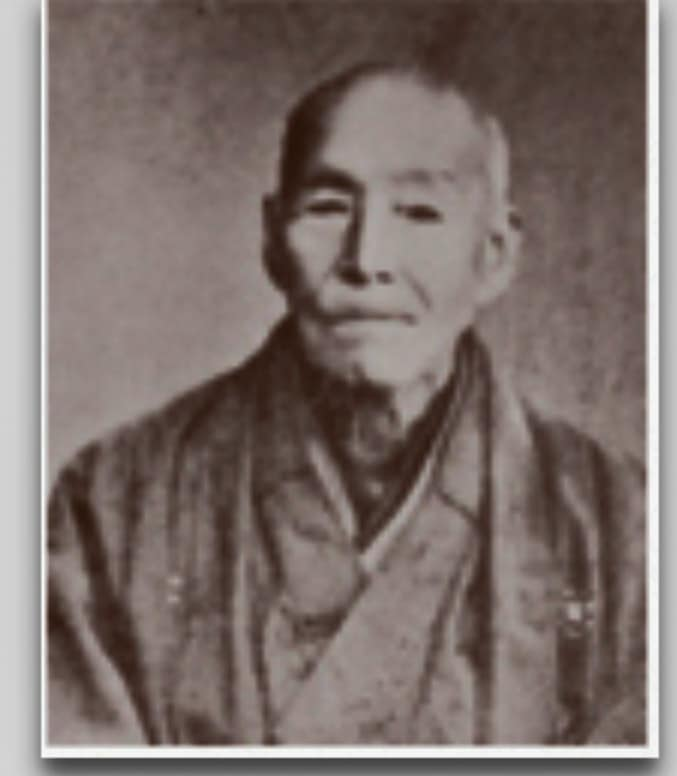
8th Sōke Aoki Kikuo Hisakatsu
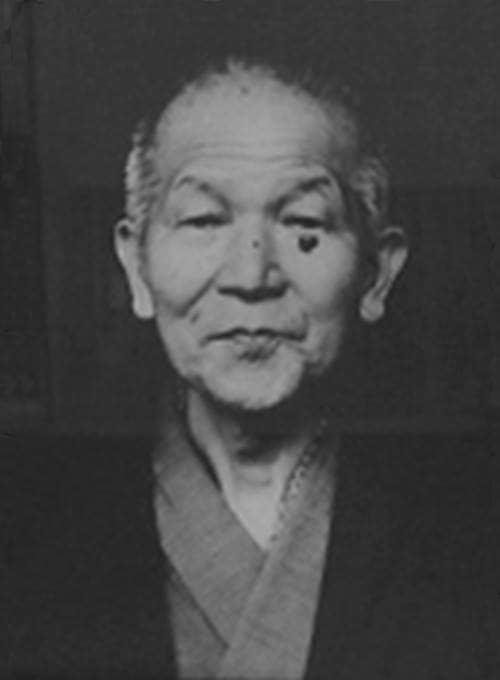
9th Sōke Kiyonaga Tadanao Masazane
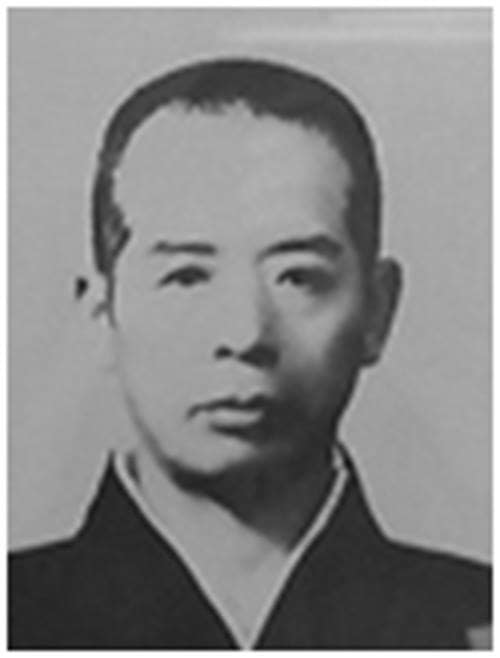
10th Sōke Imai Masayuki Nobukatsu
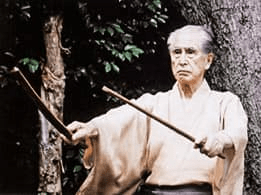
11th Sōke Iwami Toshio Harukatsu
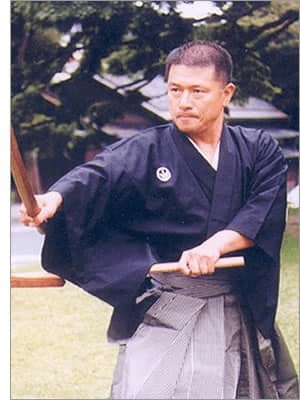
12th Sōke Kajiya Takanori Kougen
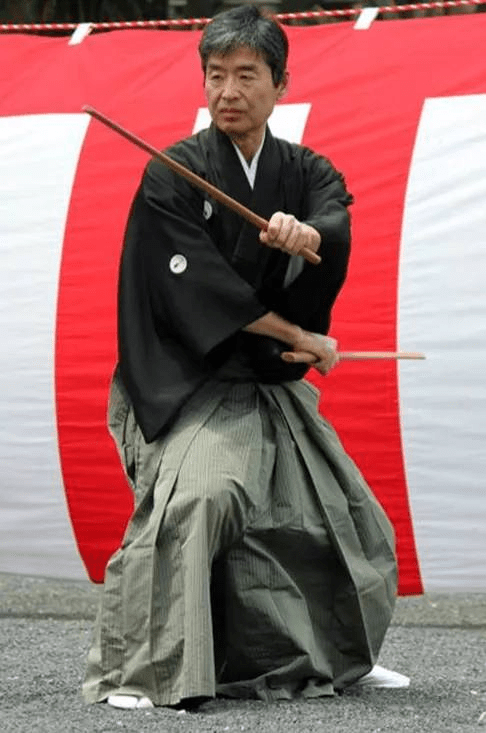
Sōke
Kajiya Takanori-sensei was initially a student of Imai Masayuki Nobukatsu (10th Sōke) of Hyoho Niten Ichi-ryu when moving from Tokyo to Kyushu. Soon after he became a student of Iwami Toshio Harukatsu (11th Sōke) and for years supported Iwami-sōke at the Hombu Dojo and at international seminars.
Prior to Hyoho Niten Ichi-ryu, Kajiya sensei had extensive background in Martial Arts, including Itto-ryu, Iaido, Shurikenjutsu and Jujutsu.
On the 24th November 2013 the Soden-shiki ceremony took place in front of the Seishin-chokudo stele, in the Chisen Kaiyushiki Garden of Kokura Castle.
At the ceremony, 11th Headmaster Iwami Toshio-sōke formally presented the title of 12th Sōke to Kajiya Takanori-sensei. Presenting both a Menkyo Kaiden (full transmission of the school licence) and Miyamoto Musashi’s Jisso-Enman bokuto, the wooden sword believed to be the only original one left in existence. This was in testimony for passing on the title and function of sōke to Kajiya Takanori Kougen, 12th sōke of Hyoho Niten Ichi-ryu.
Kajiya-sōke also practises Sado (Japanese Tea Ceremony) with the Osagawara-ryu, where he holds the title of Shihan (Master Teacher). Miyamoto Musashi-sensei had a strong historical connection with the Osagawara-ryu and its school of etiquette.
Today, Kajiya-sōke teaches at both hombu in Kyushu and to students around the world to those who wish to learn Miyamoto Musashi’s founding school, which survives to this day thanks to the ongoing efforts of our Japanese teachers.
Note: There are numerous groups that claim lineage from Sōke Imai Masayuki Nobukatsu. Our group lies with the main line carried forth from Iwami Toshio for clarity and we hold the position of the Honbu in regard to this matter. For those who wish to read more on this, information can be found here.
 Newcastle Niten