
About
Hyōhō Niten Ichi–ryū Newcastle-upon-Tyne has been operating for over twelve years, focusing on studying this particular school of Japanese traditional (kenjustu) swordsmanship.
Below is a quick run through of what Niten is, and who we are. If you wish to practice with us, feel free to reach out via email. Please make sure to let us know if you are coming down, as the school is small and it is correct etiquette to give us a bell before you show up so we can be ready with the necessary equipment.
Why practice Niten?
Traditional Art
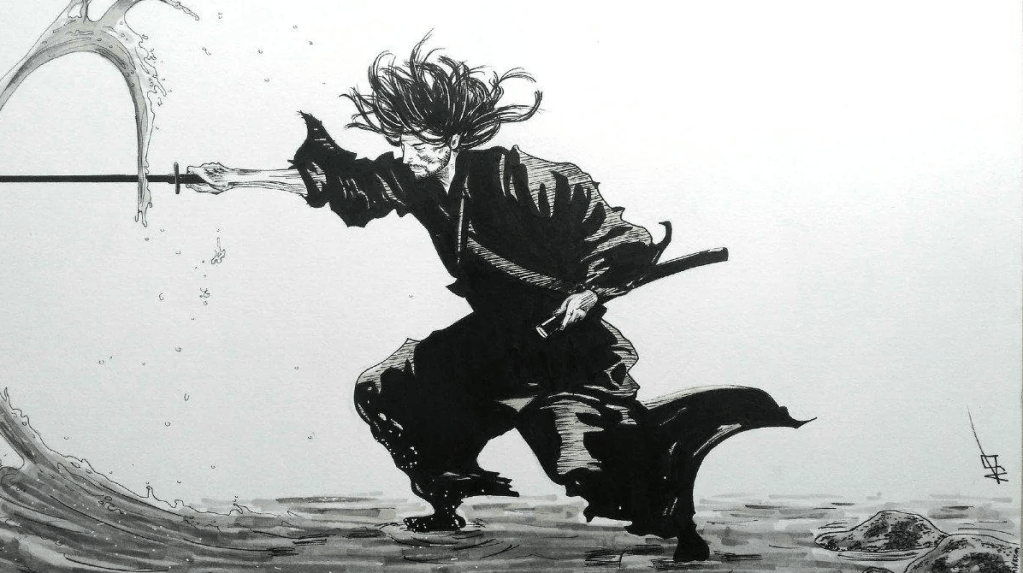
Niten is one of the oldest Japanese traditional schools of swordsmanship, being founded in the Early Edo period. As such, we are highly privileged to be able to study this martial art. Miyamoto Musashi is widely regarded as one of the greatest swordsman to have ever lived. Unlike a ‘do’ arte, niten is kenjutsu. Kenjutsu, literally meaning ‘methods, techniques, and the art of the Japanese sword‘, means that Niten preserves the original intention of the techniques as effective ways to wield and use a sword as a weapon.
Physical and Mental Health
It is well known that practicing martial arts brings numerous physical and mental health benefits. By practicing Niten, you can effectively facilitate mastering your mind and emotions. That can help develop greater emotional stability, assertiveness, self-confidence, and lessen aggressive feelings. From this, comes increased self-esteem. Outside of this, Niten is good exercise for the body, and can help develop posture, breathing control, and generally tone muscle and improve coordination and control.
Personal Development
Musashi wasn’t just a great swordsman, but was also a gifted philosopher. Known as a ‘kensei’ or sword saint, Musashi wrote the influential texts Go Rin no Sho (The Book of Five Rings) and Dokkōdō (The Path of Aloneness).
Whilst originally written with the life of a swordsman in mind, these have been used the world over as a guide to life, applied to anything from military strategy to business. These works are widely regarded as being as important as Sun Tzu’s The Art of War.
“There is nothing outside of yourself that can ever enable you to get better, stronger, richer, quicker, or smarter. Everything is within. Everything exists. Seek nothing outside of yourself.” – Miyamoto Musashi, The Book of Five Rings
Our Instructors
Deborah Pallari
Deborah has been studying Niten Ichi Ryu since 2007, and is privileged to considered as one of the UK country leaders. She has hosted and attended seminars throughout the UK and Europe during this period.
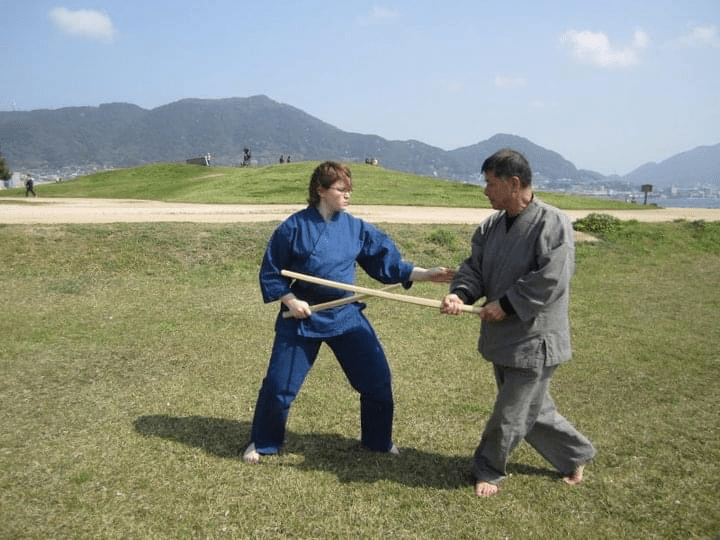
Deborah was fortunate enough to train with the current and previous soke in Japan in 2011 as per the below photo, and is looking forward to her next visit.
Deborah has over 30 years’ experience in Japanese budo, beginning with Judo as a child. She also studies Muso Jikiden Eishin Ryu Iaido (since 1999) as well as Kendo.
Matthew Robson
Matthew was first exposed to Japanese budo when younger, also starting out with Judo. Matthews first introduction to weapons training was in 2012, with Niten Ichi Ryu. This was the catalyst for further involvement in martial arts.
Outside of studying Niten for now twelve years, Matthew has also practiced in both Kendo and Muso Jikiden Eishin Ryu Iaido.
Outside of Budo, Matthew also has several years training under his belt in Historical European Martial Arts, where the focus has been primarily on the German (Liechtenauer) school, as well as the Italian (Fiore) school.
“Think lightly of yourself and deeply of the world” – Miyamoto Musashi, The Book of Five Rings
What does Niten look like? How is it practiced?
Kata
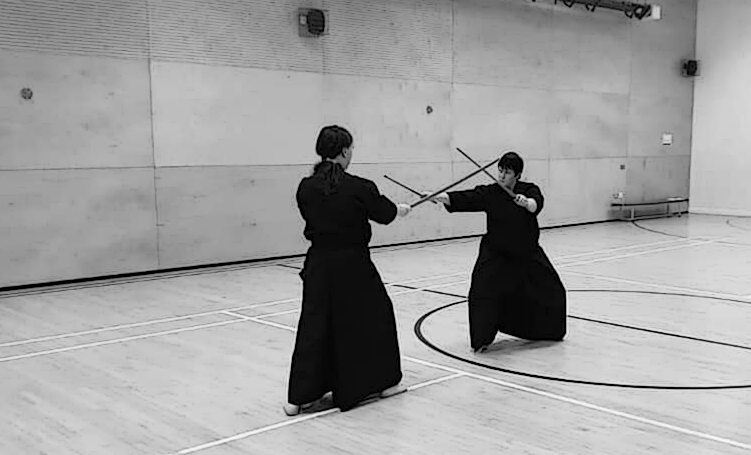
Niten is taught using a set of movements known as Kata. This is analogous with other Japanese martial arts.
Currently, the school teaches three sets of kata with varying degrees of techniques contained within them.
These include longsword, shortsword, and dual sword techniques, which are practiced solo as well as with a partner. You can find out more in our Kata page.
Reiho
Being a school of traditional swordsmanship, Niten incorporates a concept of Reiho, translated literally as ‘the way to behave’.
When we practice Reiho in the dojo, we are not only respecting the Japanese roots of the Art but also learning self discipline and how to treat ourselves and others with respect.
This is a core component of how we train and conduct ourselves.
Equipment
Niten is a decidedly light art when it comes to necessary equipment.
For clothing, we generally wear simple samue coupled with an obi. Beginners simply need to wear comfortable clothing, which does not restrict the body nor hides visibility of leg movement. Niten does not use armour.
Weapon wise, we use wooden daitō and kodachi, specific to our school. We can provide limited numbers of these or stand in bokutō for beginners.
“You can only fight the way you practice” – Miyamoto Musashi, The Book of Five Rings
 Newcastle Niten